R V N S Vol 2: Between White & Red Enhancing the Spectrum


Imagine a new color at your table, a new vibrational frequency, between your white wines and your reds.
We tend to separate wines, and how they pair with food, in two pretty distinct categories: whites with appetizers, seafood, warm seasons; reds later in the meal to accompany more substantial dishes and bigger flavors.
But a wine that bridges this divide, might make us reconsider how we traditionally compose a meal.
Picture the beautiful range of white wines, a spectrum encompassing limpid, green hues and running to deep gold. And then your reds, ranging from pale rust to deep violet.
In between lies the rich, complex world of orange wines (named for their color, not for citrus). These wines are also called amber or skin-contact white wines. Essentially, they refer to wines whereby white grapes are processed like red grapes. That is to say, rather than quickly pressing them off, the pulp and juice macerate with the skins, seeds, and sometimes stems, to extract tannins, and therefore more color and structure.
(The inverse of this, Rosé, yet another range in wine’s color spectrum, are red grapes processed as white, that is, with minimal contact with the skins. The “é” at the end indicates past tense, that is, the wine has been “rosed” - given a slight blush of color.)
In Georgia & Armenia, where some of the earliest archeological winemaking sites exist, their fruit, be it white or red, is processed in the same manner. The region's white wines, then, are traditionally made with extended skin contact.
When I spoke with our winemaker, the Maestro, Aaron Pott, about making an orange wine in 2021, he immediately agreed, on the condition that we do a whole cluster fermentation, stems included.
We brought in an extra ton of Sémillon from the Bavarian Lion Vineyard in Knights Valley, the source of our dry white wine, The SERPENTS. The whole clusters macerated in terracotta amphora for an extended period, about two months, allowing for more tannin extraction. After being pressed off, the wine aged in clay for another sixteen months before being bottled unfiltered. This process imparts a wonderful chalkiness, depth and complexity that pushes them into their own category: structured, deeply golden wines that embrace a wide array of flavors without overpowering them.
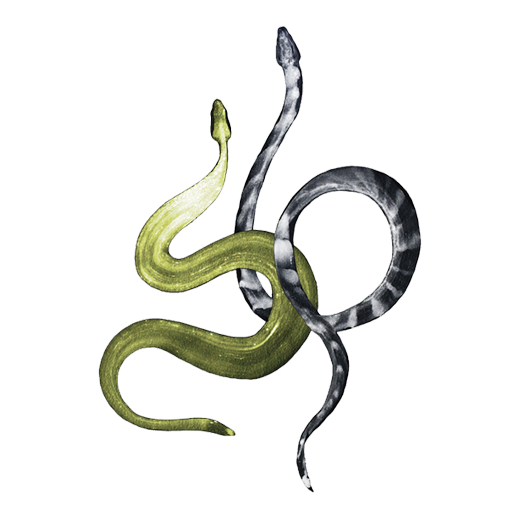
Derived from The SERPENTS on the skins, the new incarnation is naturally called SNAKESKIN. The resulting flavors and aromatics are distinctive, running from jasmine, apricot, chamomile, and beeswax, to saline, mineral, and black tea notes.
Orange wines pair remarkably well with flavors that can be difficult to complement, as a recent dinner at a favorite restaurant, Farmoon, in Kyoto, attested. SNAKESKIN enhanced charred eggplant, smoked mackerel with figs, and lemon pasta.


Masayo, creator of Farmoon
That said, SNAKESKIN also marries happily with blander fare such as turkey. For Thanksgiving, it is challenging to find a good match for the holiday bird. White wines, unless aged, risk highlighting turkey’s insipid nature, and reds can overpower white meat. Orange wines, however, bring the perfect amount of character and structure to enhance the feast.
It is this versatility that makes skin-contact wines inspired and reliable choices. Especially when unsure whether to go white or red, the answer just may be orange.



Enjoy our limited-production wines
Please choose a path...
Membership guarantees an Allocation of our limited-production wines. Space is limited.
Join the ConspiracyReceive updates and notifications of releases. Allocations are first-come, first-served.
Join our Mailing List